The Question Nobody Asked
Two people looking for someone to marry, the year that nearly ruined both of them, and the one thing that would have changed it.
Read this straight through, like a story. It takes about eight minutes.

Two people you have never met
This is Bilal. He is twenty-five. And this is Sumayya. She is twenty-two.
They have never met each other, and they never will. But the same thing is happening to both of them. Both of them want to get married. Both of them are looking on the internet. And both of them are doing it completely on their own.

The websites that say “free”
Bilal joins a website with the word FREE in big letters at the top.
He types in his name, his age, his job, and how much money he earns. He takes a photograph of himself and tries again until he likes one. He presses the button.
Then a message appears. To see her name — pay. To send her a message — pay more. To find out whether she has even read it — pay again.
The website already has everything about him. He asks if he can have it back. The answer is no.

The websites that really are free
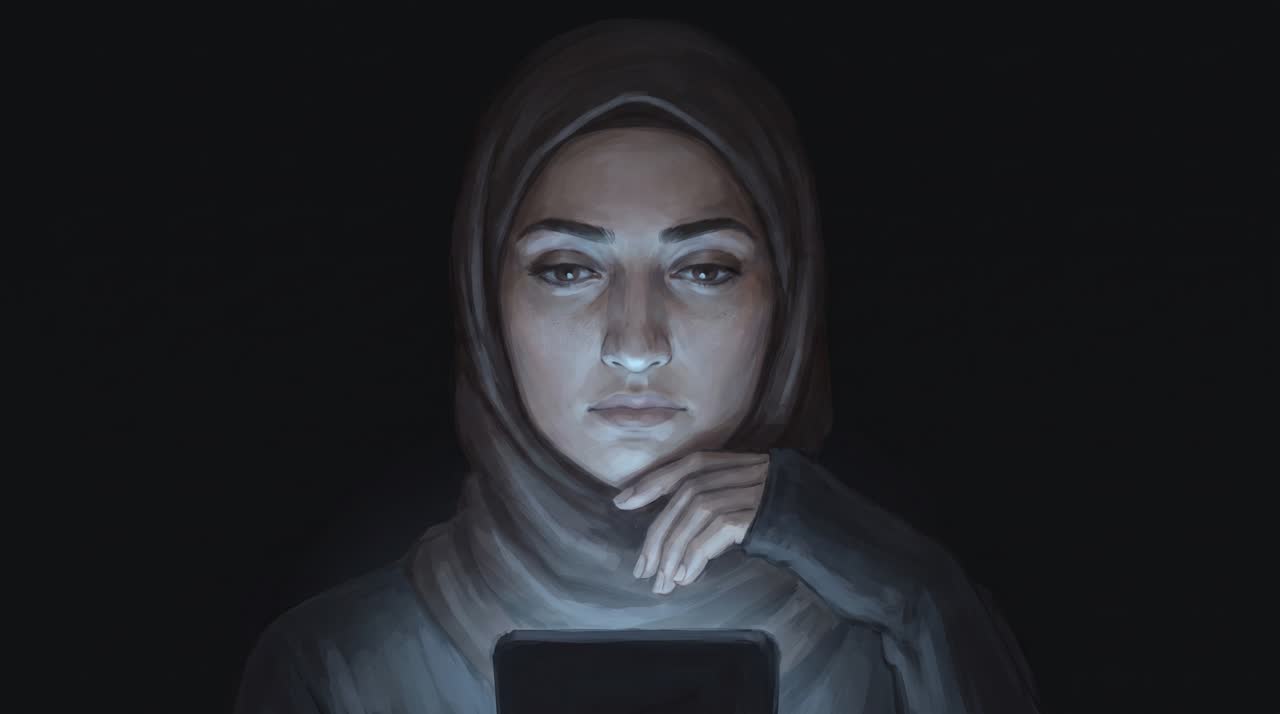
So Sumayya tries the ones that really are free.
She gets three hundred messages. She reads every single one.
Not one of them asks her a question. Three hundred people, and not one is curious about her. They only talk at her.
The one who asked a question
Then a man asks what she studied.
A real question, at last. Sumayya is so pleased that she writes straight back, and for a few minutes it feels like an actual conversation.
Two messages later he asks her for a photograph. Not the kind you show your family.
She puts the phone face-down on the floor and pushes it away from herself with one finger.
Six weeks of kindness
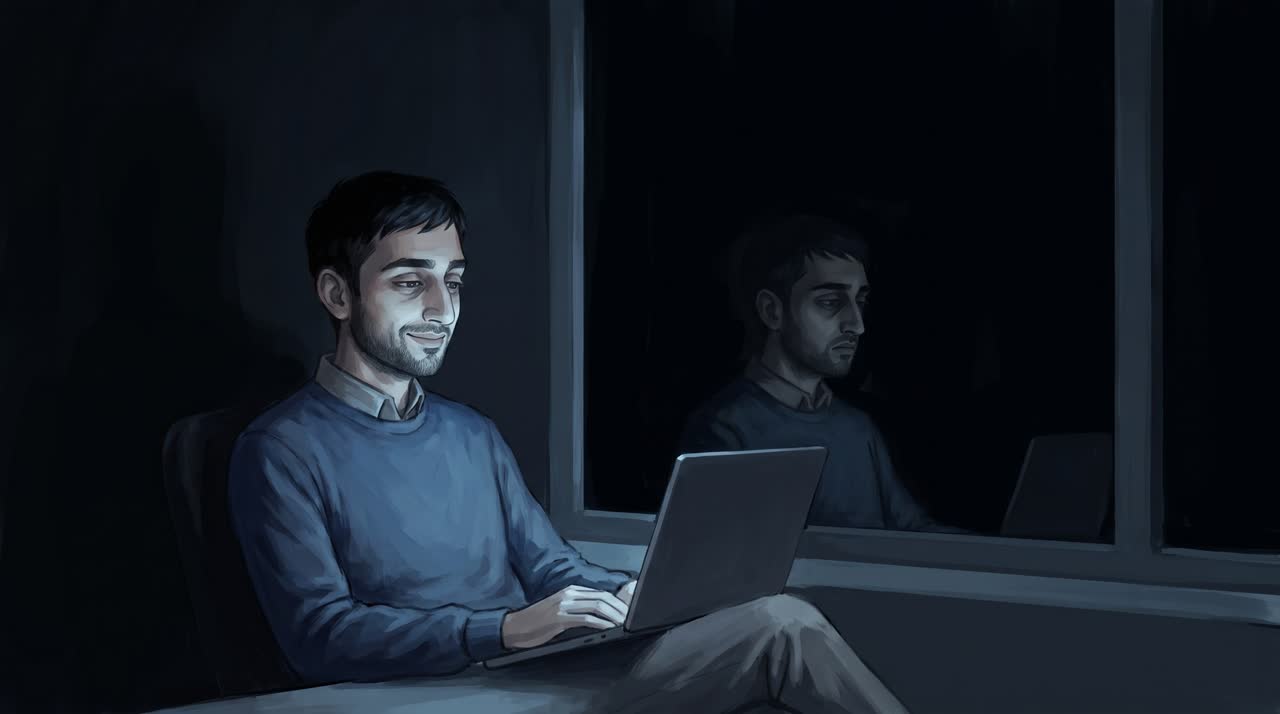
Bilal meets someone kind.
For six weeks they talk every day. She remembers small things he told her. She notices that he has been looking after his mother since his father died. Nobody has noticed that in a long time.
Then she asks him for money. Her brother needs an operation and the payment has not arrived.
Bilal asks what her brother is called. She answers instantly.
Last week she told him she was an only child. She never writes again.
Worn out
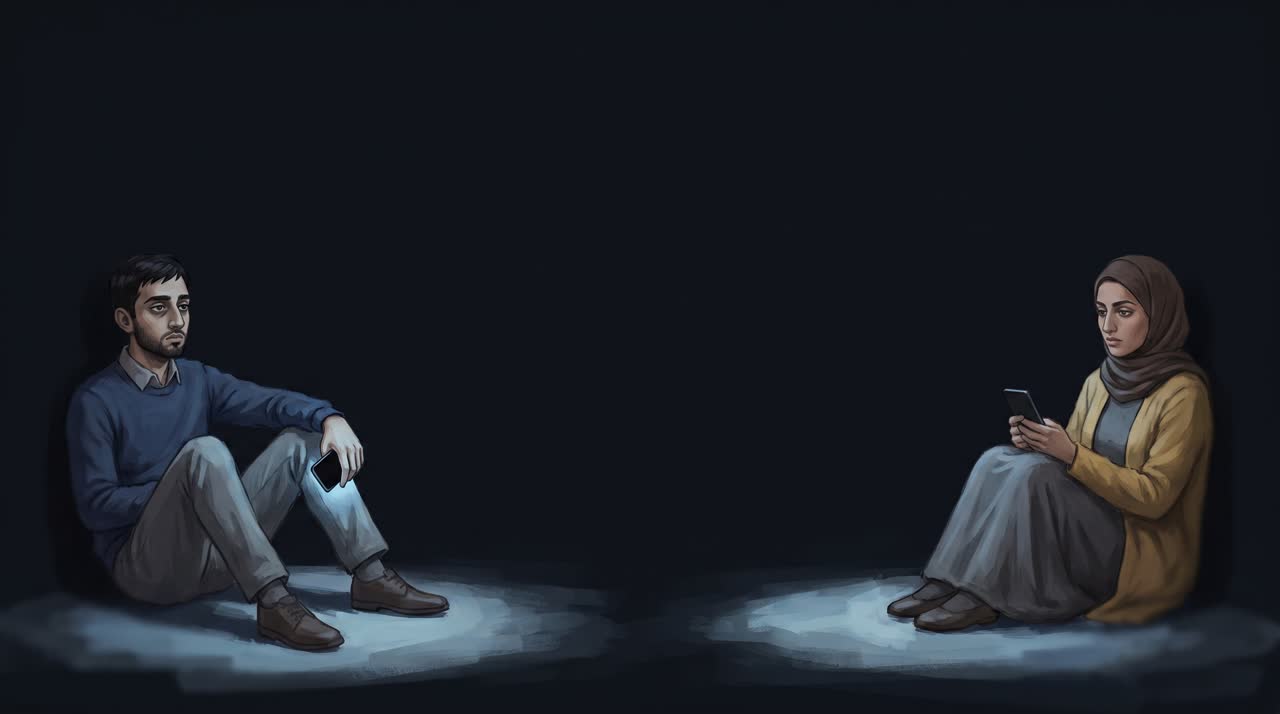
By now Bilal has been looking for fourteen months. Sumayya has been looking for eleven.
She can spot a liar in three messages. That is not a skill anybody should have to learn.
He has stopped being careful. That is worse.
Yes, very fast
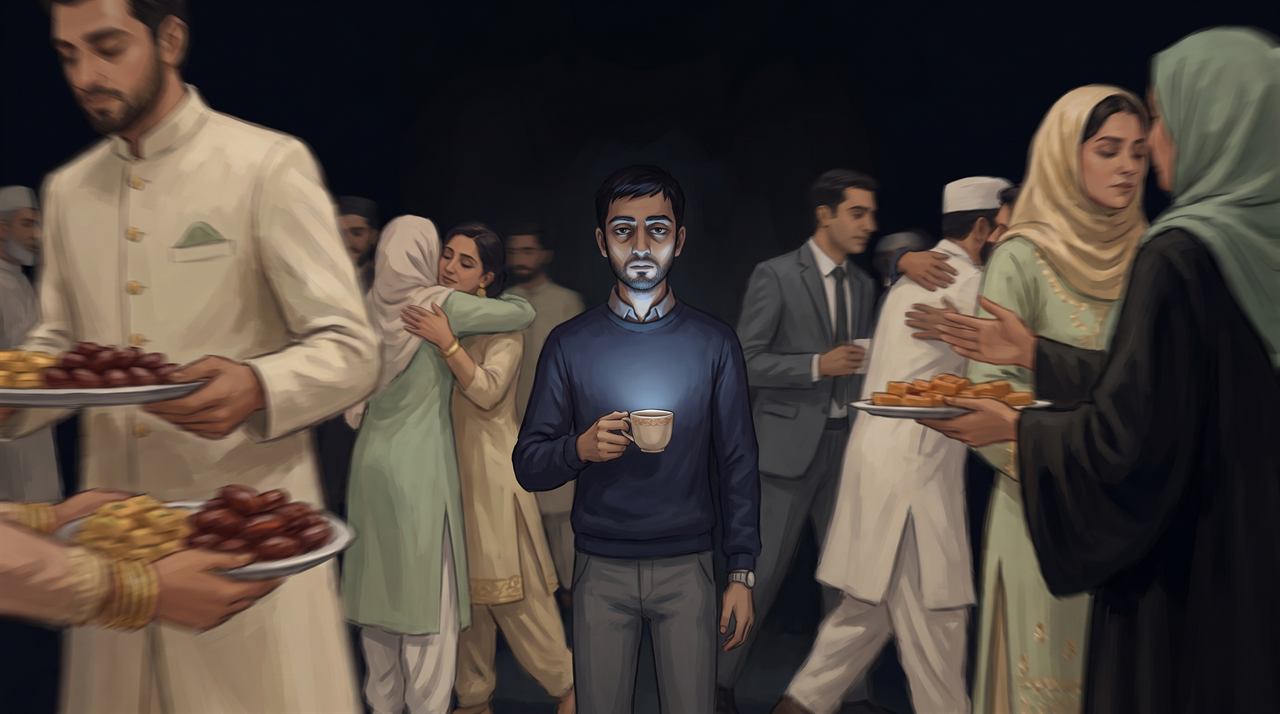
So when somebody ordinary finally writes — a normal family, politely asking to speak to their family — they both say yes very fast.
Bilal is married eleven weeks after the first message. Sumayya is married in nine.
Everybody says: at last!
Nobody says: what did you actually ask her?
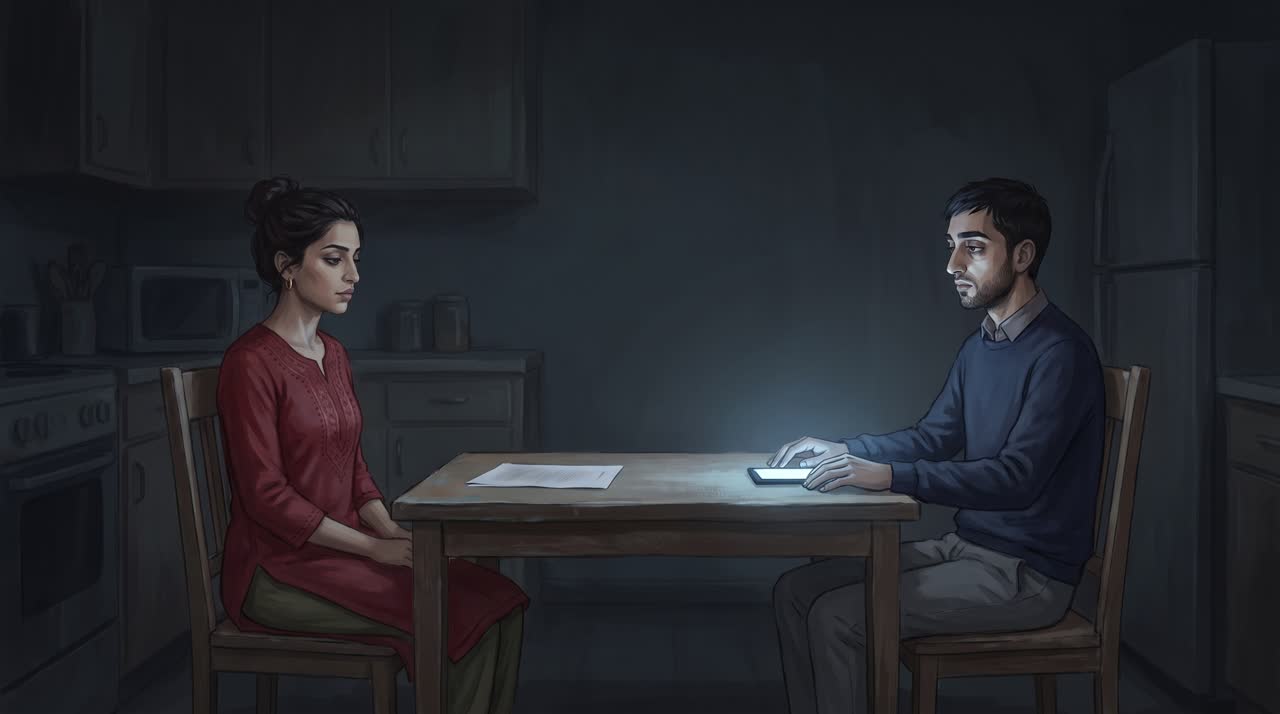
The question nobody asked: Money
Bilal's wife Ayesha is clever and funny and he is lucky to have her.
She is also part-way through a doctorate that costs nine thousand dollars a year. Bilal did not know. It was written on her profile. He never read it properly.
And Bilal has a secret of his own. To pay the mahr — the money a husband gives his wife, which belongs to her and to nobody else — her father asked for twelve thousand dollars. Bilal did not have twelve thousand dollars. He borrowed all of it, because he did not want to look poor.
When it finally comes out, Ayesha says something quiet and terrible.
“I would have taken four. I told my father four was enough.”
“Why didn't you tell me that?”
“Nobody asked me.”
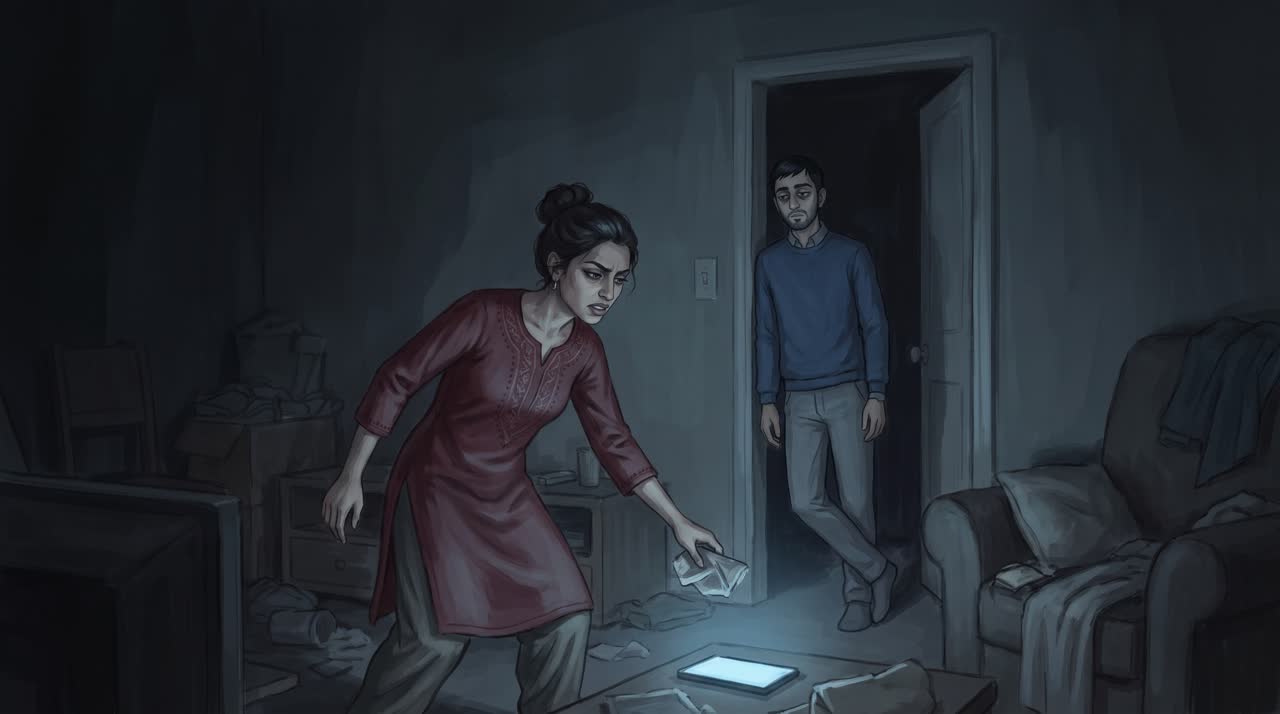
The question nobody asked: The house
Then there is the house. Who cleans it. Who cooks. Who is allowed to be tired.
Ayesha works, and studies, and comes home to a mess, and every time she is the one who deals with it.
Bilal says his mother ran a house and four children and never once complained. He stops before the end of the sentence — but she has already heard the end of it.
“I didn't know I was applying for her job.”
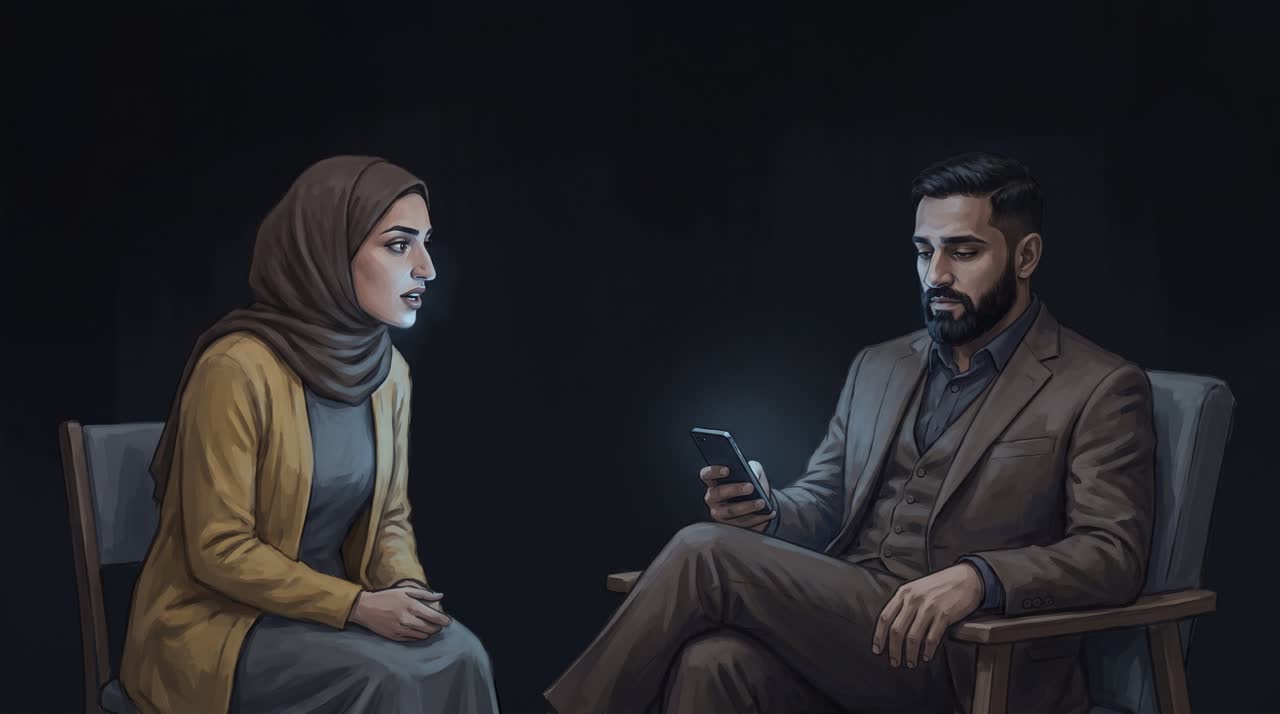
The question nobody asked: A second wife
Sumayya's husband Tariq is tall, well-off, educated and completely certain about everything. After a year of men who could not finish a sentence, certainty felt like solid ground.
After the wedding he tells her he intends to take a second wife.
He is genuinely surprised that she minds. She had agreed with everything else he said, so he assumed she agreed with this too. He never actually asked her.
And she never argued — because she was trying very hard to be easy to be married to.
That, he tells her, is exactly why he chose her.
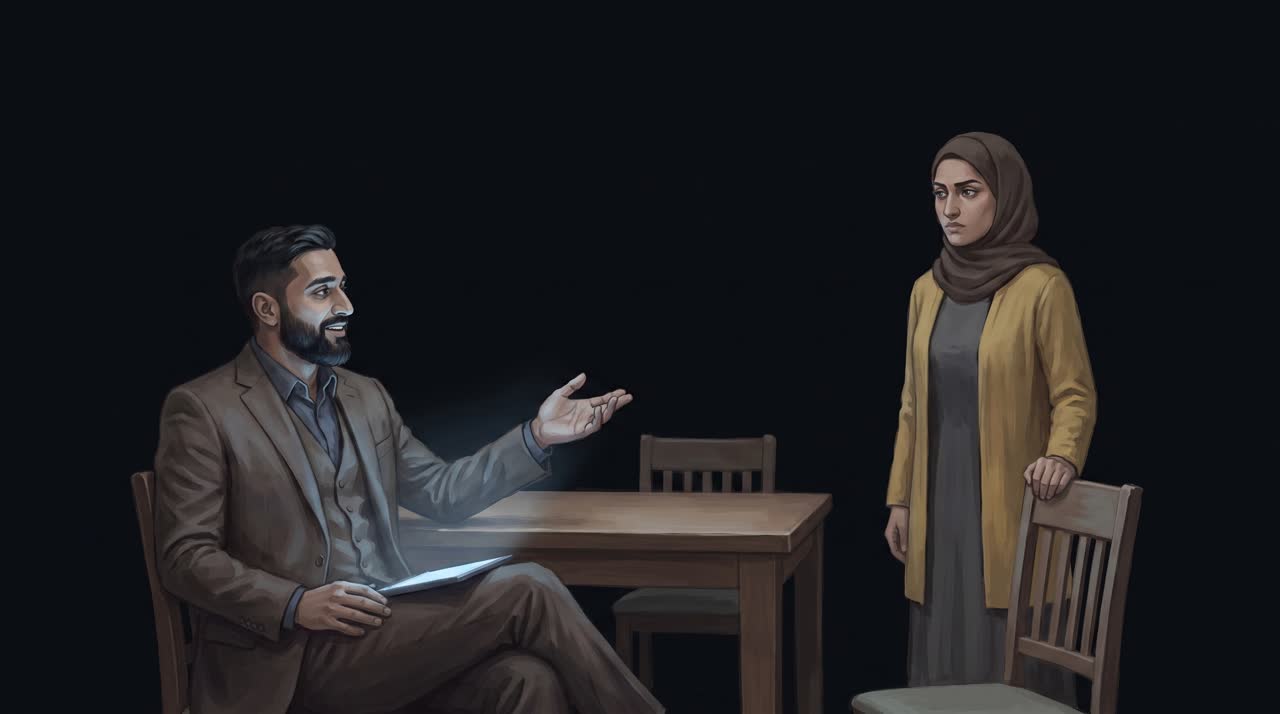
Nowhere to stand
Then come the rules. The gym at six every morning. And the meat — there is too much of it in this house, he says, and he is not wrong that it is every meal.
If she wants to keep eating the way her mother taught her to cook, she can fund that herself, and fund what it does to her health later. Or she can think seriously about whether this is working.
And standing there, the thought in Sumayya's head is not how dare you.
It is: how do I make this work? It is always that. She waived her mahr and she does not regret it — there is no shortage of money in this house and there never was. She asked for nothing because she was in love, and she wanted him to know it was not about money.
What she cannot get past is quieter than money, and worse.
“How am I supposed to compromise on this,” she says, “when I committed to you with my whole heart, and you never committed to me with yours?”
And he says — and this is the thing she has no answer to —
“How can you say you committed wholeheartedly, when you would forbid me what Allāh has permitted?”
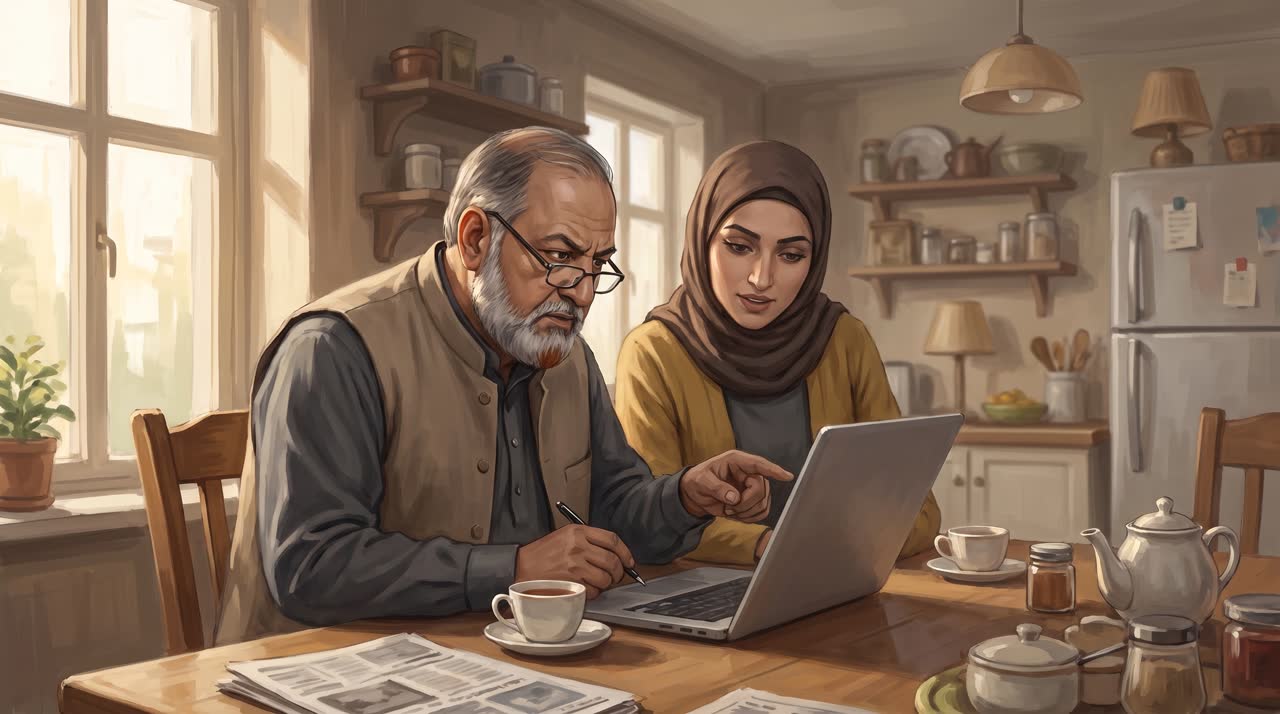
Now imagine all of that again
Now go back to the beginning, and run the same year again — but this time on AlHaqqMatch.
Sumayya's father is squinting at it, because every website says free. But this one is still free at the exact point where the others start asking for money. He can see who has been verified, and by whom.
And his own name is on it. He is not hiding at the edge of this as somebody's “cousin”. He is her wali — the guardian whose job is to protect her interests — and the site expects him to be there.
He reads the line at the top of the page: Looks fade. Character endures.
Then he sits down properly, for the first time. “Alright. Show me how it works.”
Being told the truth about yourself
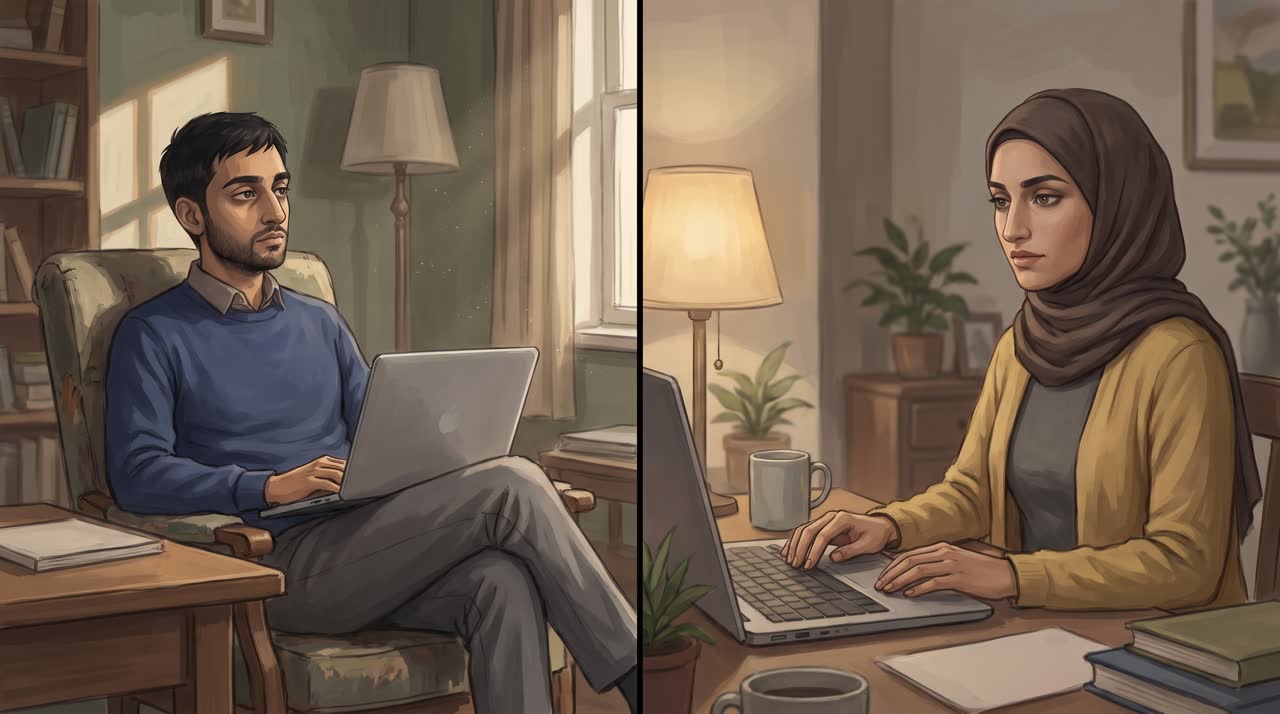
Before anybody is introduced to anybody, the site does something nobody expects. It shows each of them what other people honestly made of them.
Bilal is told: you wrote nine lines about the wife you want, and one line about yourself. Eleven people used the word vague. When people read “easy-going”, what they hear is — he has not decided anything, and he would like her not to mind.
Sumayya is told something harder. You have written four hundred words about him — his height, his income, his degree, his family, where he prays and how often. It is the most detailed section on your profile by a distance.
Then you answered forty-one questions about how the two of you would actually live, and chose “flexible” on thirty-eight of them.
Six different people wrote some version of the same sentence. She has a specification for the husband and none for the wife.
Neither of them enjoys reading it. Both of them go back and change their answers.
The questions asked out loud
Then comes the part that saves them.
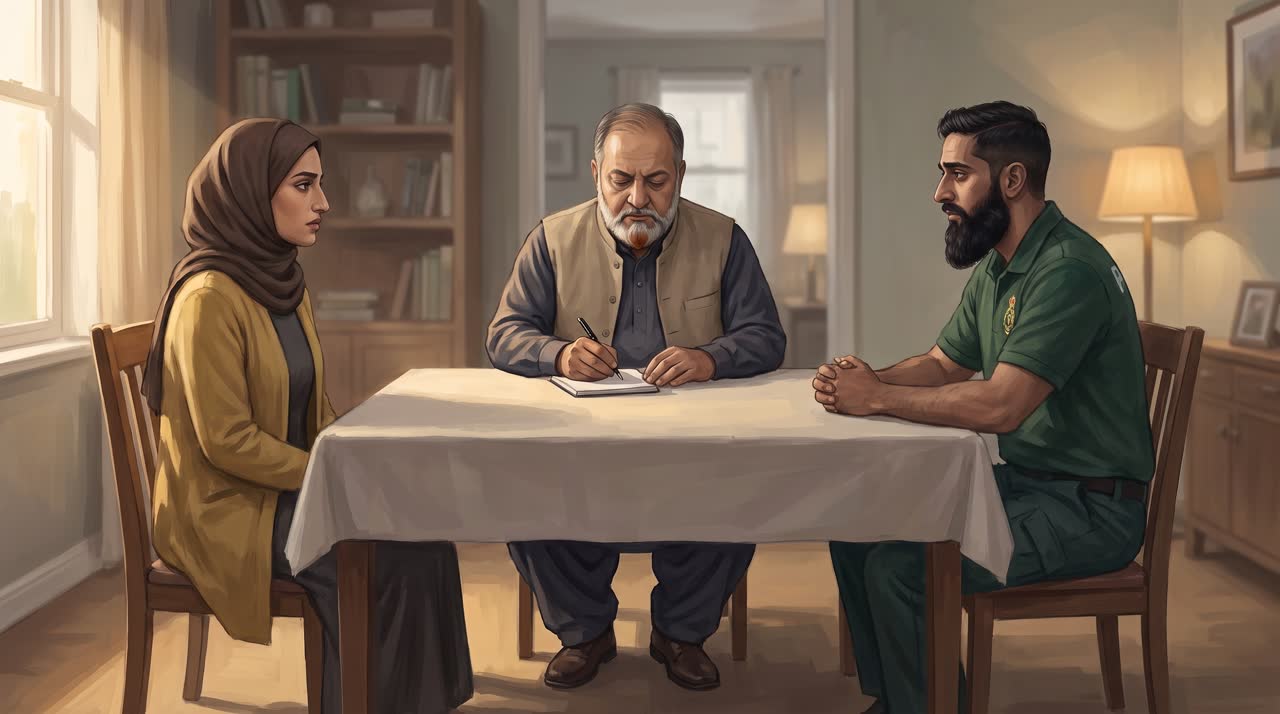
The site gives them a list of hard questions and expects them to be asked out loud — with her father sitting at the end of the table, writing the answers down.
Yusuf is a paramedic. He works nights. He is not rich and he is not tall. He goes first, because he knows that if he waits he will lose his nerve, and if he loses his nerve he will do what everybody does, which is not ask.
“Number nineteen. Would you accept a co-wife?”
And Sumayya does not flinch, and does not pretend.
“I know our religion permits it. I am not going to sit here and tell you otherwise.”
(beat)
“But I struggle with the idea of sharing my husband. That is mine to own, not a fault in the ruling.”
(beat)
“Thank you for asking me. Nobody has ever asked me. Can I ask you one back?”
“Would you take a second wife, knowing it would displease me?”
Yusuf does not hesitate.
“No. Never. Your preferences would come first in every decision I make.”
That is all it takes. He asked so that he would know. She answered honestly instead of strategically. If either answer had been different they would have shaken hands, and she would have lost one evening — instead of three years.
The same facts, a different marriage
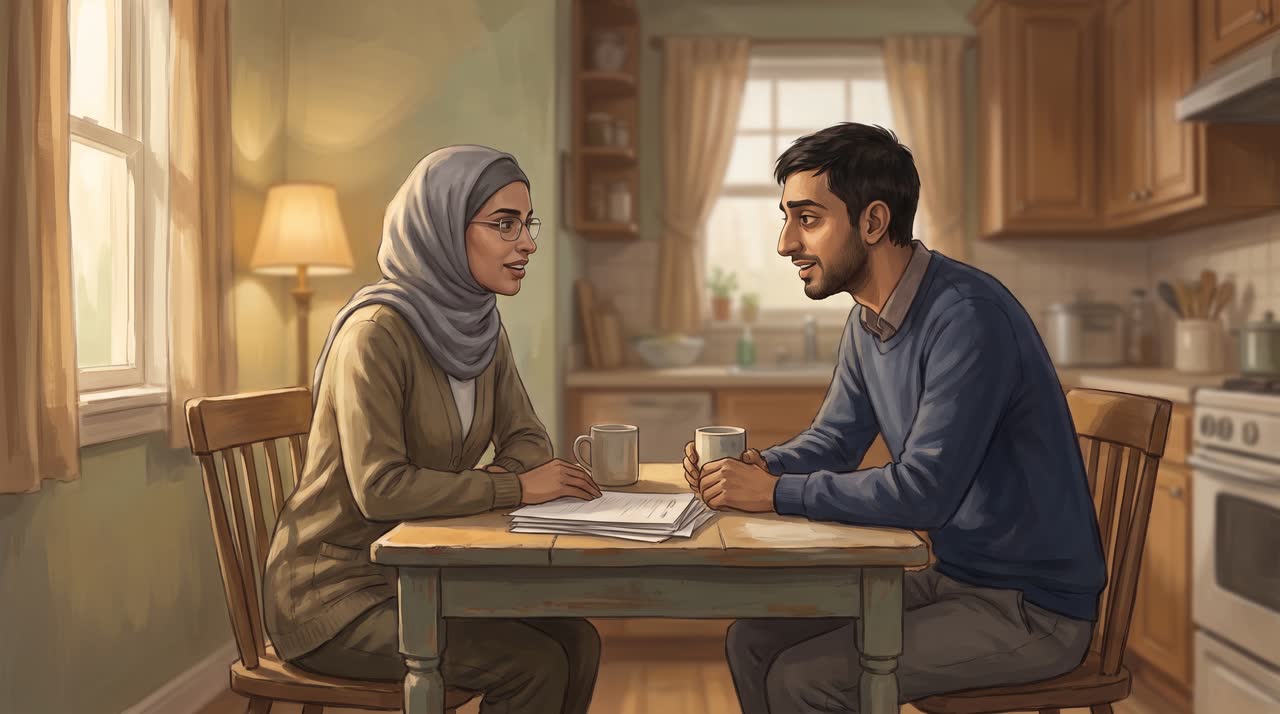
At another table, Bilal meets Khadijah. She is also part-way through a doctorate. It costs nine thousand dollars a year — the very thing that wrecked his first marriage.
This time he says it out loud: I cannot pay for that. Not “it would be tight”. I would default.
And Khadijah says: I never asked you to. My salary is mine, and I was always going to pay for it myself. I was not sending you a bill. I was telling you where my evenings are going for the next three years.
The same facts. A completely different marriage.
Then she names her own mahr — four thousand — and adds: if you would have to borrow it, make it two. I would rather have less money and a husband who isn't frightened of the mail.
Writing it down
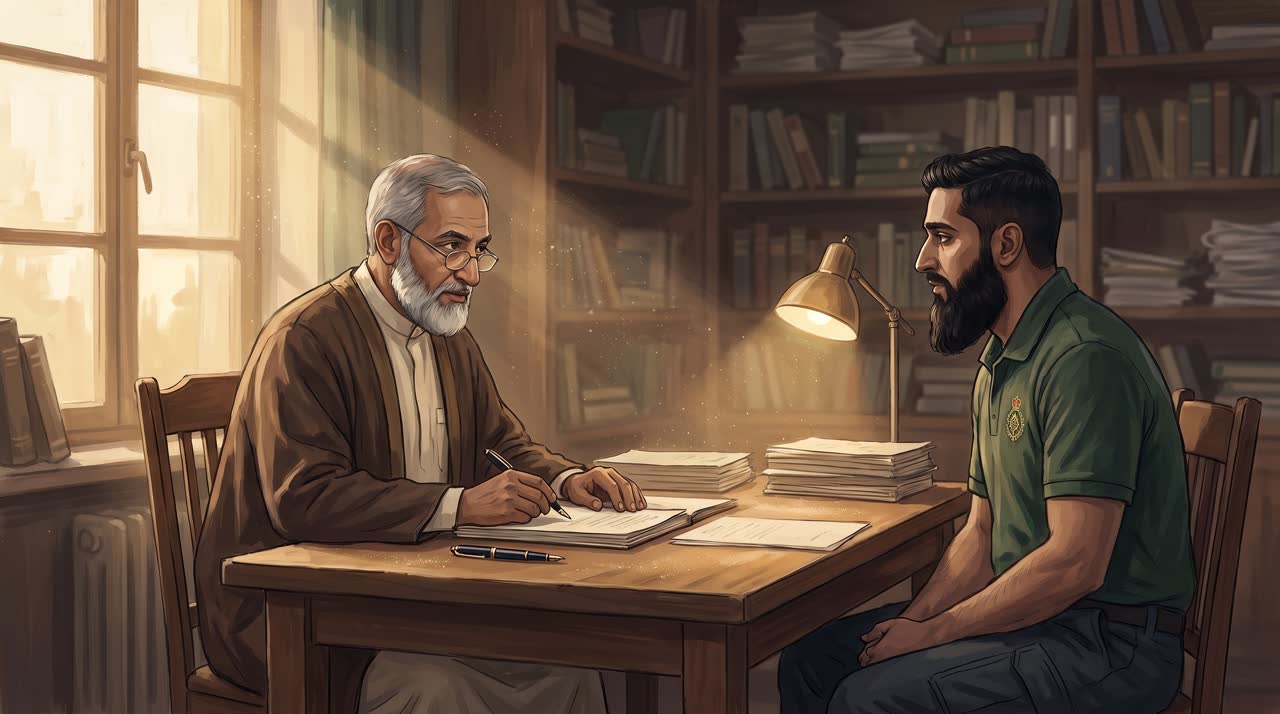
An imam reads the agreement back to them and checks that it means something.
Yusuf has undertaken, in writing, that he will not take a second wife. Not because the thing itself is forbidden — the imam is careful about that — but because a man may bind himself by a condition he has freely given, and Yusuf has given it.
“You understand what you are signing. Not a preference. A condition.”
“I understand.”
“If you break it, she may end the marriage and she keeps her mahr. Say it back to me.”
Yusuf says it back.
Then the imam puts down his pen.
“I have done four hundred of these. The couples who come back to me are almost never the ones who disagreed. They are the ones who never found out that they did.”
One last question
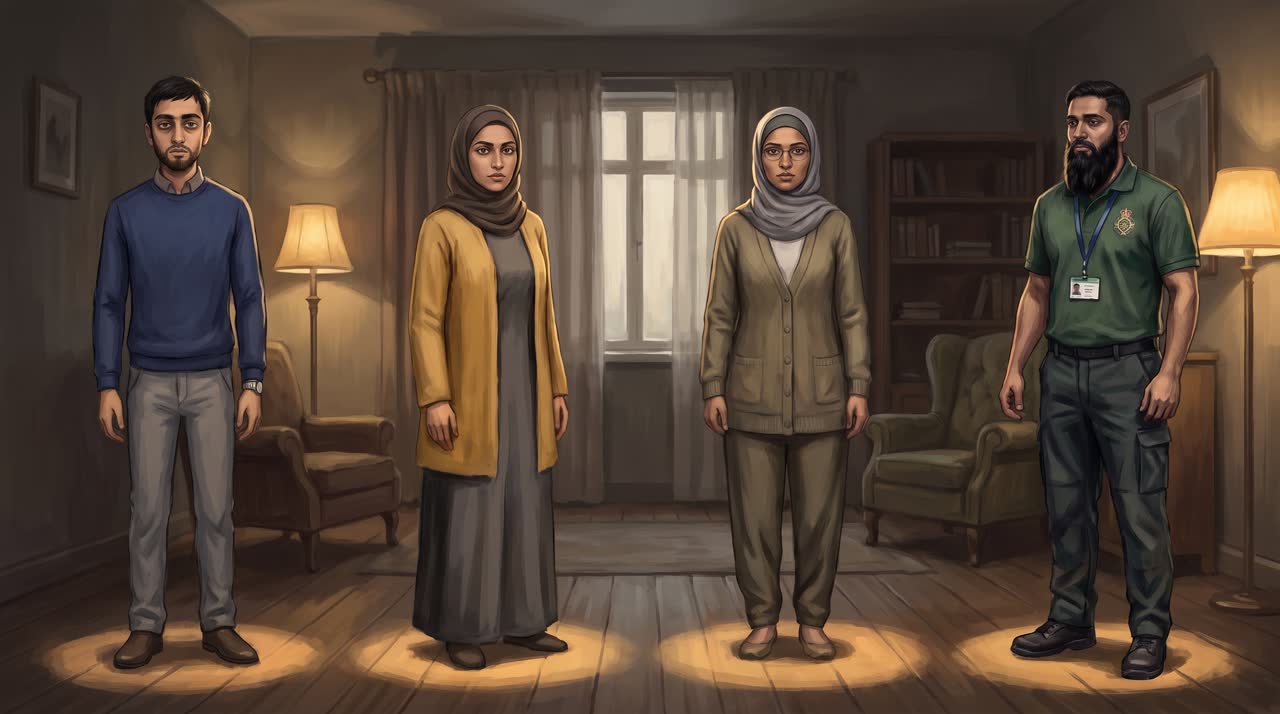
There is one final question, and this is the one the whole story turns on.
Both people answer it separately. Both answers are attached to the agreement, in writing, where they can be found later.
If you have a disagreement in your marriage — a real one, where neither of you is willing to move — how will you resolve it?
They write down the answer before they need it. While everybody is still calm, and still honest, and still being kind to one another.
A real disagreement
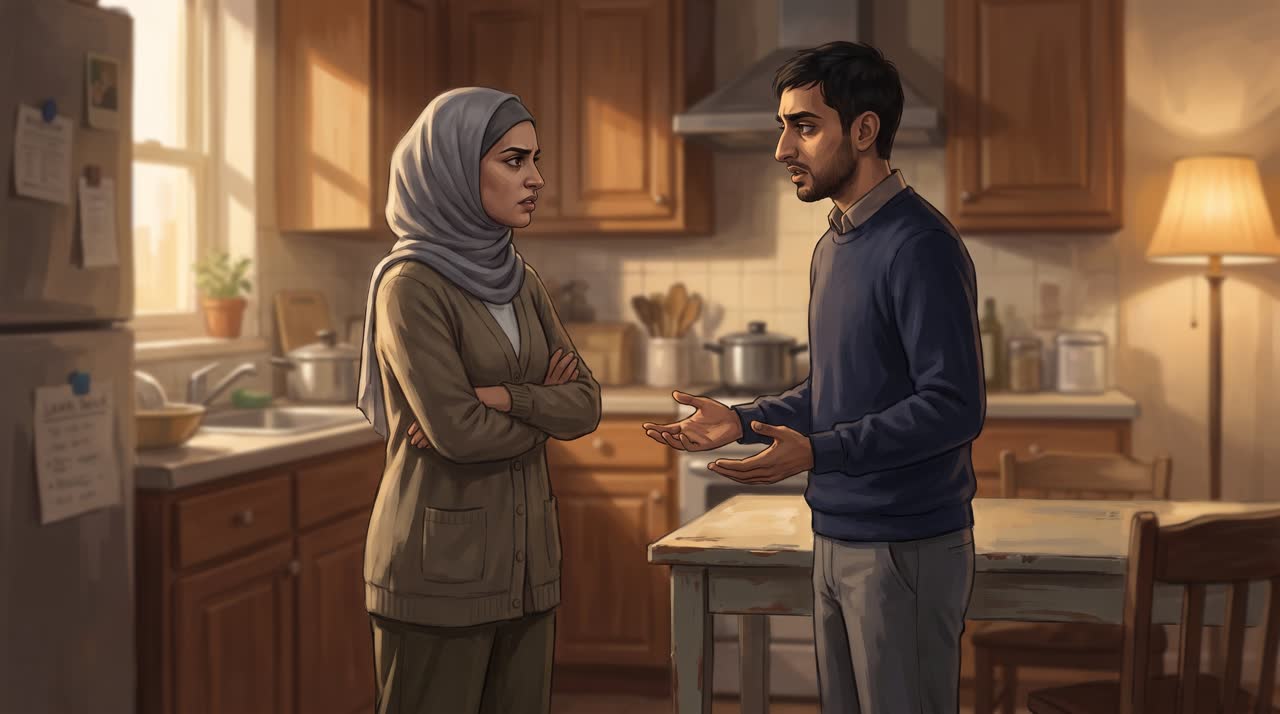
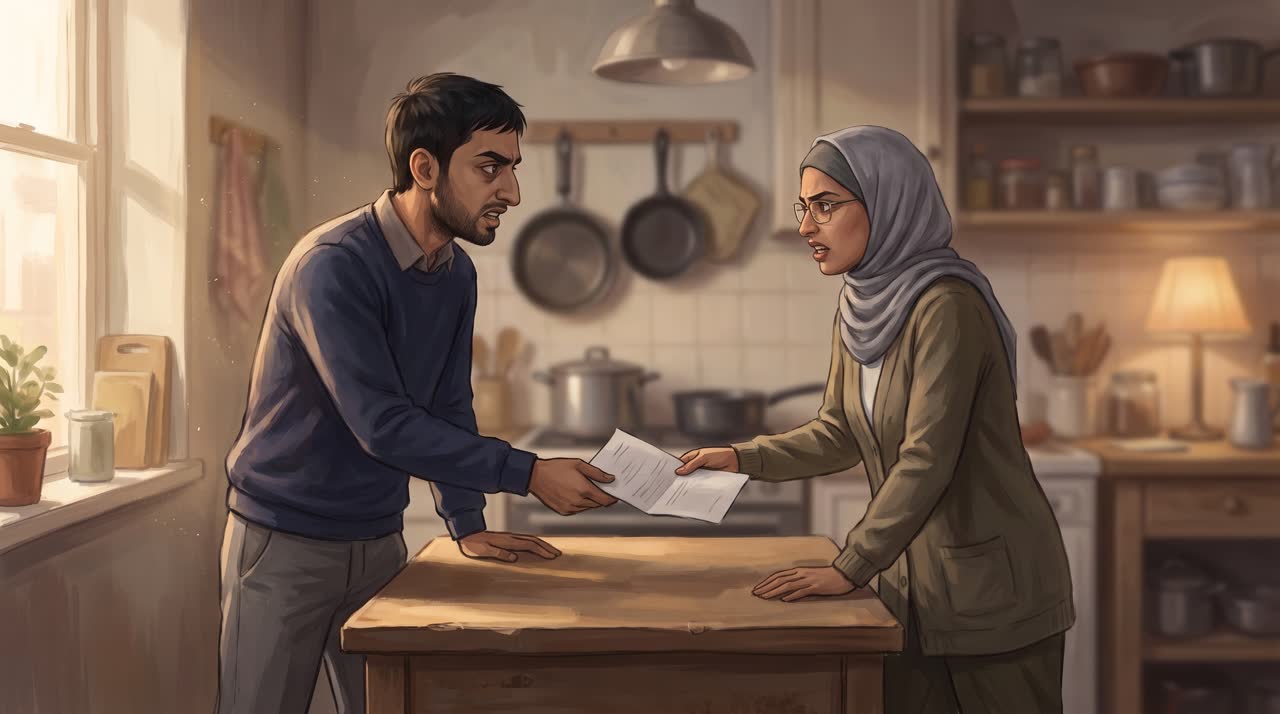
Two years pass. And then it happens, because it always happens.
Bilal's mother needs a stairlift. It costs four hundred dollars a month for a year, and it means the house they have been saving for goes back another year on top of the year they already waited.
Khadijah is angry, and she has every right to be. Bilal knows it is not fair on her, and says so, and that does not make it fair.
They do not agree. Nobody is pretending they agree.
The silence that does not happen
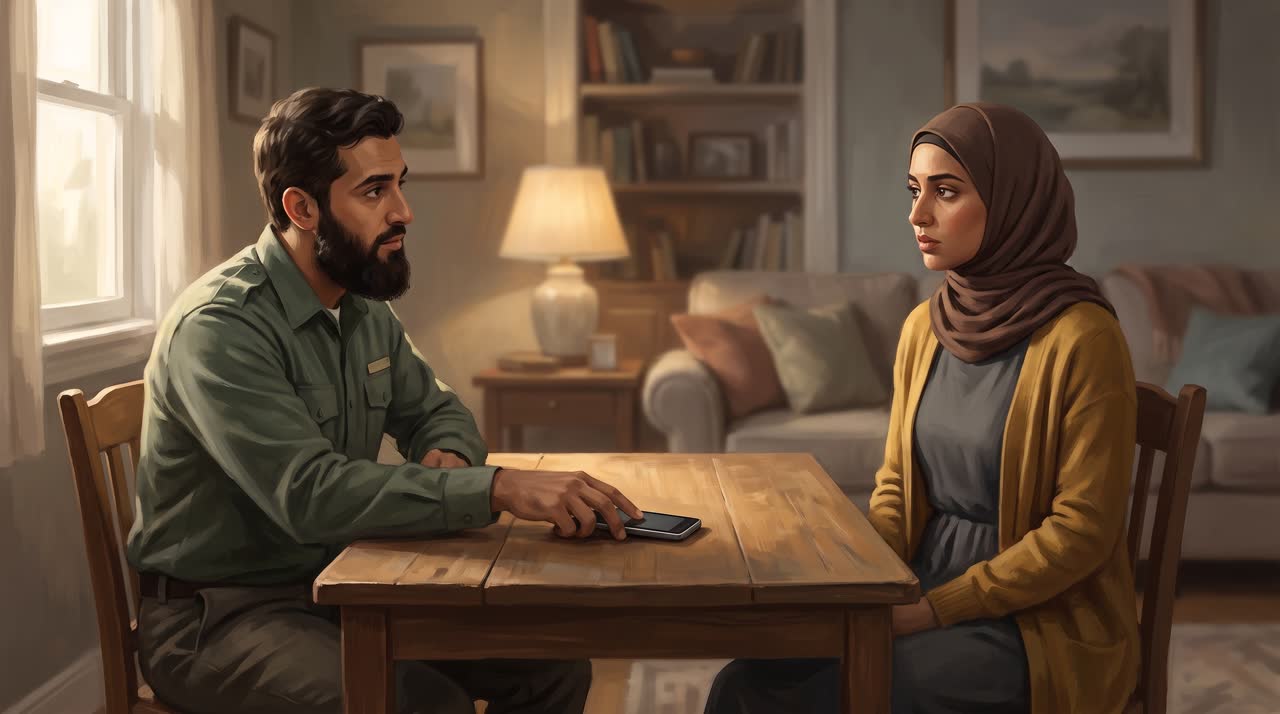
In the other house, Yusuf has gone quiet.
Sumayya knows that silence. She was married to that silence once — a man who simply stopped being in the room whenever she disagreed with him.
So she says: you're doing the thing.
And Yusuf stops. He puts his phone face-down on the table — the exact thing her first husband never did — looks at her properly, and tells her the difficult true thing he has been swallowing since Ramadan.
It is worse than she thought. She thanks him for it anyway.
What they reach for
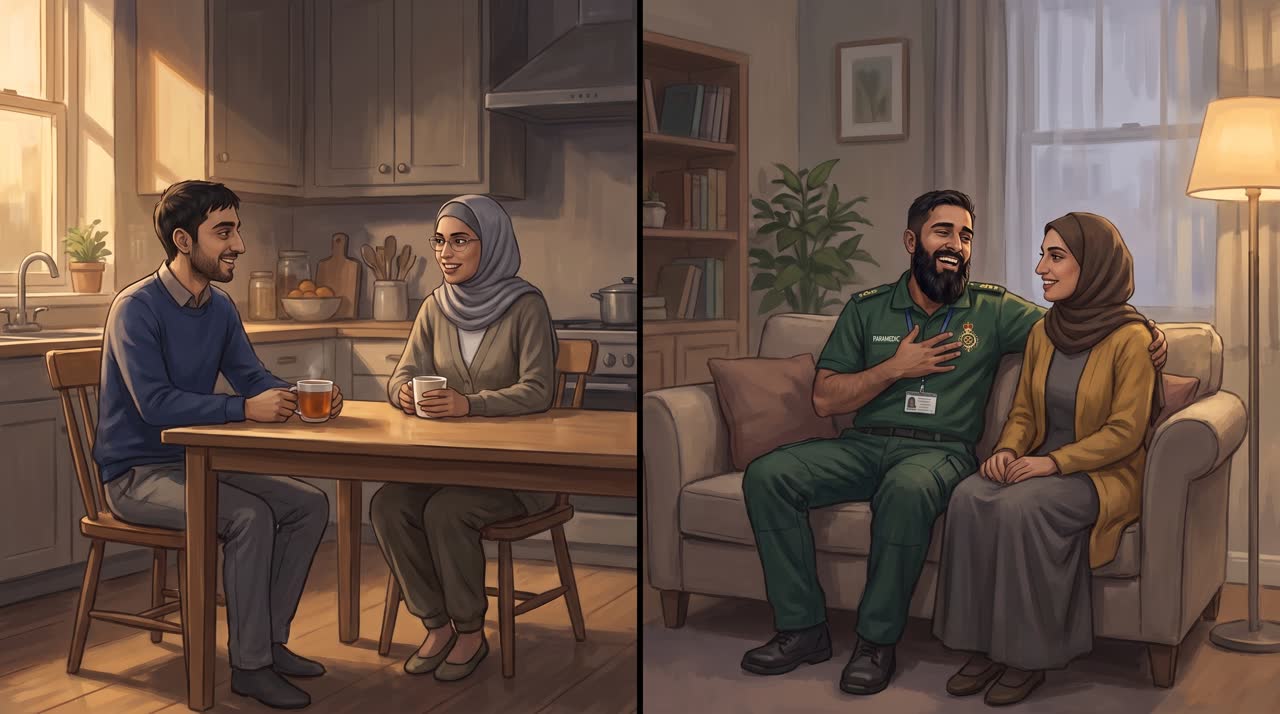
Neither couple has magically stopped disagreeing. That was never what they were promised.
What they have is the answer they wrote down before they needed it.
Bilal and Khadijah decide nothing important on the same night — twenty-four hours first, then they talk. Sumayya and Yusuf give it a week, and then ask somebody neither of them chose.
Nobody wins. Both of them are still a bit cross about it.
But nobody is left standing alone in the room, and nobody finds out something enormous two years too late.
What actually saved them
So that is what AlHaqqMatch did.
It did not find them a perfect person, because there isn't one. It did not stop them arguing.
It was free, all the way through, at every step where the other sites put up a wall. It checked that people were who they said they were, so the six-week friend and the man asking for photographs never reached them at all. It put her father in the room instead of leaving him outside it. It made them say the true, awkward, embarrassing things out loud and early — to a real face, in front of family — and then it wrote the answers down while everyone was still being honest.
Bilal never met Sumayya. He never will.
But the same thing saved both of them, and it was not luck.
Somebody asked.
Start the honest way — free.
Verified profiles, your guardian in the room, and the real questions asked out loud. No paywall at the moment it matters.